Offense vs. defense: how football strategy actually works
American football can look chaotic at first. Twenty-two players charge at each other every few seconds, helmets clash, and then everyone resets and does it again. But underneath all of that, there is a deeply strategic game going on. Once you understand the basics of offense and defense, the sport starts to make a lot more sense.

Two teams, one ball
Every play in football starts with a simple idea: one team has the ball, the other team wants to stop them. The team with the ball is called the offense. Their job is to move the ball down the field and score. The team without the ball is called the defense. Their job is to stop that from happening.
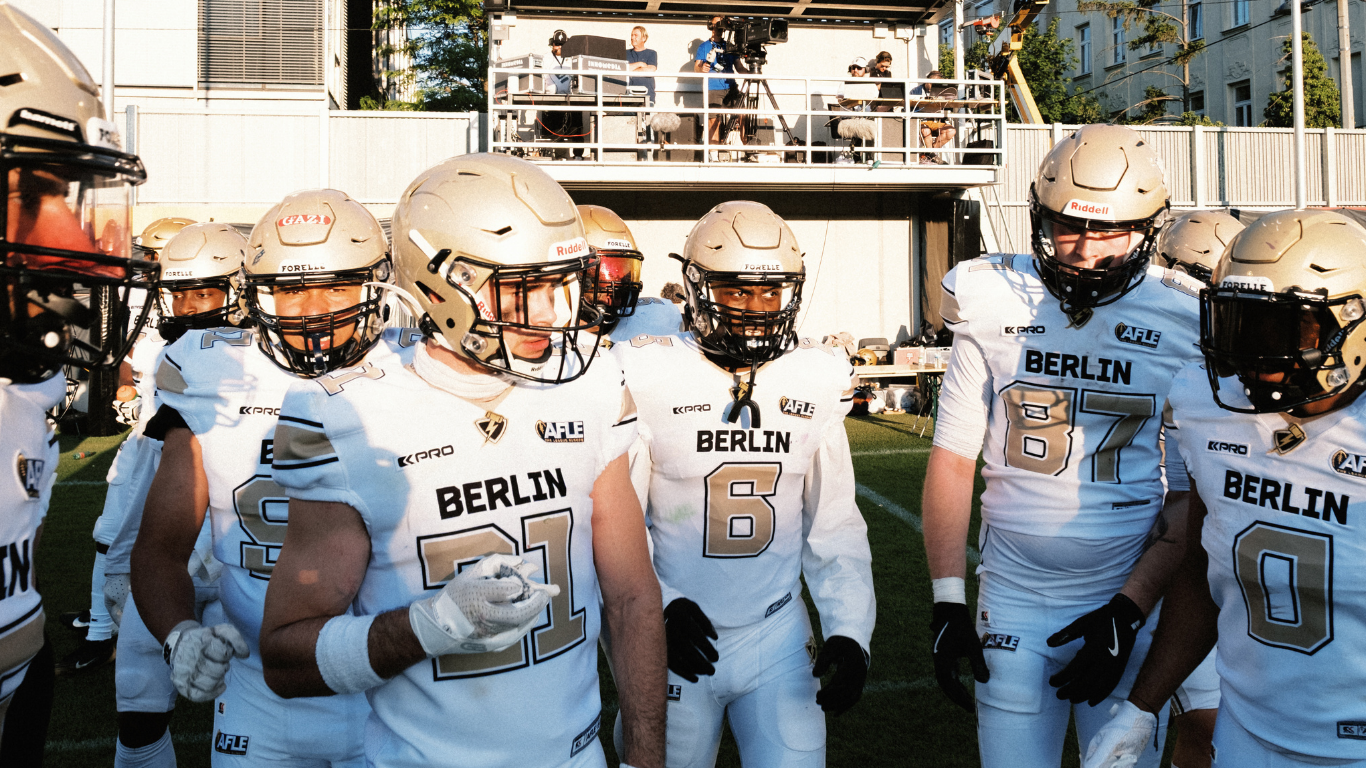
Both sides have 11 players on the field at the same time. But what those players do and where they line up is completely different.
What the offense does
The offense starts every play from a line called the line of scrimmage. They have four attempts, called downs, to move the ball at least 10 yards forward. If they manage that, they get four new downs. If they don’t, the other team gets the ball.
The most important person on the offense is the quarterback. He receives the ball at the start of every play and decides what to do with it. He can hand the ball to a running back, who tries to run through the defense. Or he can throw the ball to a wide receiver, who has sprinted downfield to catch it.
Every play the offense runs has been planned in advance. The coach and the quarterback call a specific play before each snap, and every player on the offense knows exactly where to run and what to do. This is why good communication and trust between players matter so much.
What the defense does
The defense lines up across from the offense and tries to read what play is coming. Their main job is simple: stop the offense from gaining yards.
The players closest to the line are the defensive linemen. They try to push through the blockers and tackle whoever has the ball. Behind them are the linebackers, who are more flexible. They can rush the quarterback, stop running plays, or cover receivers depending on what the offense does.
Further back are the defensive backs, including cornerbacks and safeties. Their job is mainly to stop passes. When a quarterback throws the ball, these players try to either tackle the receiver right after the catch, or ideally intercept the ball and give their own team possession.
The defense can also change its formation before each play to confuse the offense. This constant adjustment on both sides is part of what makes football so tactical.
The battle of strategy
Before every snap, both sides are essentially trying to outsmart each other. The offense might shift their formation to see how the defense reacts. The defense might move players around to disguise their plan. The quarterback scans the field and might change the play entirely based on what he sees.
This chess match plays out in just a few seconds before the ball is snapped. And it repeats on every single play.
A great offense can carve through even a good defense with the right call at the right time. And a great defense can shut down a top offense by taking away their best options. The result is a game where preparation, creativity, and quick thinking matter just as much as physical ability.
Special teams: the third part of the game
There is also a third unit in football that often gets overlooked: special teams. These players come onto the field during kicks, punts, and field goal attempts. They do not play offense or defense in the traditional sense, but they can completely change the momentum of a game. A long kick return, a blocked punt, or a perfectly placed kick can be just as important as any touchdown.
Why strategy matters more than you think
What makes football so fascinating is that every play is a complete unit. There is a buildup, a decision, a moment of action, and then an outcome. The offense and defense are constantly adapting, adjusting, and trying to gain an edge.
Once you start to see the strategy behind the action, the game opens up in a whole new way. You stop watching just the ball and start watching the whole field.
Watch strategy in action with the AFLE
The American Football League Europe is bringing professional football to European fans starting on May 23, 2026. With teams competing from across the continent, the AFLE is the perfect place to see offense and defense battle it out at the highest level. Follow the league and experience the game for yourself.